What Needs Do Alternative Art Organizations Address in the Contemporary Art World?
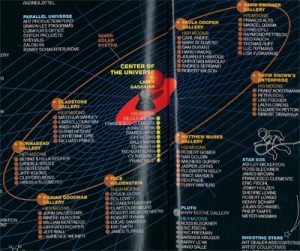
Brett Littman, who has worked in the alternative art earth of downtown New York, retraces here the history of noninstitutional art forms and art exhibitions from the 1960s to the present. He helps united states of america to estimate the ability of art deportment that were able to thrive only against a background of protests against commercialism in general and of anti-Vietnam War politics in particular. Not that these experiences would not have survived–some of them have, indeed, endured–only they have done and so in a landscape now radically altered by new paradigms where economics has come up to boss all forms of social activity.
Georges Armaos, for his office, goes back over the "rules of the game" on the New York art market, whose overheating adds to its foreign aura. He reviews the office each actor plays on an artistic stage that is directed more than and more by dealers to the detriment of museums and critics.
In this landscape, what remains to be written is the international history of the ways artists have always availed themselves of in club to escape their status as pawns on the chessboard of consumerist societies. These, indeed, are societies that regularly prefer to accept fine art every bit a commodity that is both magical and profitable.
Laurence Bertrand Dorléac
Seminar of January 17th 2008
Alternative Arts Movement
in New York
A Personal Histort
Brett Littman
Over the by fifteen years I take worked in four different organizations that were founded in New York in 1976/1977. These organizations are all role of the history of the Alternative Arts movement in New York, were all founded in downtown New York, all received significant start upwards funding from the New York State Council on the Arts and were originated to accost under-recognized art forms, artists, and anti-institutional curatorial exercise (not-collecting) (P.South.1 and The Drawing Middle) or a desire on the function of arts and crafts practitioners to free artistic production from the factories (UrbanGlass and Dieu Donne Papermill).
In this essay I will present a timeline of institutions and events between the belatedly 1960'southward to early 1970's. The 4 major ideas that I will explore are:
1. Arts and Politics
ii. Identity Politics
3. The Anti-Institutional Institutions
four. Studio Craft Movement
We will see from this timeline that the Culling Arts Motility in New York was intricately linked to the political and aesthetic issues prevalent in the late 1960's – mid 1970's. Vacant real manor and a soft economy also played of import roles in the development of these groups. During this time New York experienced one of its worst economical crises – leaving big swaths of the metropolis undeveloped and empty buildings, schools, and warehouses were left vacant. At the time a scattering of politicians and city planners were cognizant of the fact that culture could be a way to stimulate the economies of certain geographic locations. Through the auspices of the regime arts bureau chosen The New York State Council on the Arts and their leadership significant offset up grants were given to these groups one time they had assembled and gotten their non-profit condition and governance in place. In add-on, Civic Presidents (who today have little power) were able to turn over abandon metropolis buildings, repurpose them for cultural utilise and make them CIG'due south (Cultural Institution Groups) which were then added to the city's line particular budgets in perpetuity. This was an important step in helping these groups stabilize early on and has provided the basis for survival moving forward. Of course city funding has non go on apace with ascension budgets and oftentimes when things are bad economically in New York the culture budgets are the first to exist slashed which in turn means cutbacks of staff, hours and offerings at CIG's.
I also want to highlight that many of these spaces were direct offshoots of political action groups protesting the state of war and policies at the major museums like MoMA, the MET, and the Whitney. Today at that place is still ongoing scrutiny of many of the issues raised past these groups including: the percent of women and people of color represented in museum exhibitions and in permanent collections, how often these works are shown, what kind of position museums take in relation to sensitive racial and political topics. Yet, overall, there seems to exist a more than collegial relationship between organizations and fifty-fifty wholesale affiliations between onetime enemies (P.S.1 and MoMA).
Arts and Politics
The beginning of the Alternative Space Movement is very much tied to the social and political movements of the late 1960'due south when artist, writers and other creative people began to mobilize in protest against the Vietnam State of war. This then turned into broader protests and actions in relationship to artists' private rights in institutional contexts. Among the important groups and actions that laid the groundwork for the Culling Infinite Move were: Artists and Writers Protest confronting the War in Vietnam (aka Artist Protest), 1965; Fine art Workers' Coalition, 1969; Artists Poster Committee, 1969; Guerrilla Art Activity Group, 1969; Art Strike, aka New York Artist Strike, aka Art Strike against Racism, War and Oppression, 1970; and Artists Coming together for Cultural Modify, 1975.
The Art Worker's Coalition (AWC) had the almost far reaching impact on the development of Alternative Spaces in New York. AWC was started in response to the artist Takis removing his sculpture from MoMA because he did not want to be represented by the slice in the Auto exhibition they were organizing. The work was in MoMA's collection so this created a trouble and a question as to what rights artists had in human relationship to their work existence bear witness once it was in a museum collection. A grouping of artists and and then director of MoMA Bates Lowry encounter to discuss their demands. AWC held a forum on April 10th 1969 at SVA and later redefined its demands to MoMA and all New York museums. They published the transcript of the "Open Hearing" at SVA and also produced Documents I which surveyed the groups activities up until 1971 when they officially disbanded. Some of the documents from the "Open Hearing" are available on the internet, are nevertheless quite relevant today and are very much worth reading. They can be found at http://www.journalofaestheticsandprotest.org/5/articles/forkert.htm.
Identity Politics
AWC mobilized activity around ethnic, gender, and sexual orientation in relationship to institutional exposure and professional inequities faced by people of color, women and the gay and lesbian community in the art earth both in terms of exhibition possibilities, recognition in the canon and the issue of culturally underserved geographic areas in the urban center. Out of AWC several not-profit arts organizations were founded in the 1970'south including Studio Museum in Harlem, El Museo Del Barrio in the Bronx, and the Bronx Museum of Art, who were focused on black and Hispanic audiences and neighborhoods. These organizations became CIG'southward (Cultural Institution Groups on city owned property, in city owned buildings that receive annual line particular support from the NEW YORKDepartment of Cultural Affairs) in the tardily 1960'south early on 1970's.
Among the important groups who played a part in shaping the discussion about ethnic representation in museums were the Black Emergency Cultural Coalition 1968 – 1969 (BECC), which was founded subsequently the Whitney Museum'due south "1930's: Painting and Sculpture in America" in 1968 failed to include anew YorkBlack artists. Under Henri Ghent'southward guidance the grouping produced a counter exhibition at the Studio Museum called Invisible Artists: 1930. BECC was also involved with a critique and demonstration of Harlem on My Mind, an exhibition at the MET in 1969 curated by Allan Schoener under Thomas Hoving. Their mission statement at the fourth dimension was to be "an action-oriented, watchdog organization to implement the legitimate rights and aspirations of the private artists and the total arts community." After BECC was involved with an Fine art in Prison program and virtually notably worked with artists and writers in Attica before the riots in 1971.
During this time there was as well a significant amount of organizing being done around gender issues in the art world. The Women Artists in Revolution (War), founded in 1969, an adjunct of AWC fought for women's rights in the art world. State of war organized art actions, newsletters, posters, wrote articles, and met with museum representatives. Their mission argument and list of demands included "Museums should encourage female artists to overcome centuries of damage washed to the image of the female as an artist past establishing equal representation of the sexes in shows, museum purchases, and on selection committees. Every bit well groups like: Ad Hoc Women'south Artist's Committee, 1970, which was formed to specifically address the low number of women artists included in the Whitney's Annual (later Biennial) exhibition; A.I.R Gallery, 1972, the first independent woman's gallery in the US and after the Guerrilla Girls, 1985, who combat sexism in the art globe by using statically information virtually gender representation in museums, all added to the rise of importance of feminist issues in the art community and in major cultural institutions.
The Anti-Institutional Institutions
In the late 1960's and early 1970's there was a shift in the way that artists were conceiving, producing and exhibition their work. With the ascent of Minimalism, Anti-Form Art, Street Works, the Fluxus Move and Functioning Fine art, the context for art action moved out of the gallery and into the world. Much of the work produced during this time could not be collected in a traditional way by museums and oftentimes required specific sites, architectural settings our alive audiences to be activated.
In an effort to bargain with these new art forms several non-profits were founded by artists, curators and critics who wanted to provide platforms for this kind of work and also wanted to stand in opposition to the canonical and rigid collecting institutions.
Amongst the groups that were started during this time to accost these types of problems were: 112 Workshop / 112 Greene Street, 1970 (aka White Columns), which was founded past Jeffrey Lew and Gordon Matta-Clark as a site for the production of new sculpture in unexpected materials; The Kitchen, 1971, founded by artists who were frustrated that museums and galleries were not showing video fine art; The Clocktower Gallery, The Institute for Art and Urban Resources, Idea Warehouse (1971) subsequently condign P.Southward.1 Contemporary Art Eye in 1976, founded by Alanna Heiss, whose mission was to convert carelessness or under-utilized buildings into performance, exhibition or studio spaces for contemporary artists who were non shown in established museums; Artists Infinite/Commission for Visual Arts, 1972; started by Irving Sandler and Trudie Grace, whose mission was to provide a service system for artists that offered exhibitions, programming by artists, a space for performance, cultural meetings, events, the Emergency Materials Fund and the Independent Exhibition Program which awarded grants to artists and groups for presenting their work in other non-profit venues and unorthodox sites; Creative Time, 1974, founded by Anita Contini, which took advantage of the economical downturn that emptied hundreds of thousands of square footage of function infinite in Lower Manhattan and whose original mission statement states "Public fine art, as presented by Creative Time, challenges both the chronic isolation of artists and the widespread notion that "Art" is an elitist pastime"; The Alternative Museum, 1974 founded with the principle that "Alternative Museums (if not all museums) should devote themselves more often to exhibitions with controversial substance, otherwise they won't be alternatives at all"; The New Museum of Contemporary Art, aka The New Museum, 1977; founded by Marcia Tucker, a former curator at the Whitney, who had put on several controversial shows there, whose mission was to human activity every bit a "exhibition, information, and documentation centre for gimmicky – focusing on living artists and the work they make – work that does non yet have broad exposure or disquisitional acceptance. The New Museums projected scope lies between the non-historically oriented alternative spaces and the major museums" and The Drawing Centre, 1977, founded by sometime MoMA curator Martha Beck, with principle "of encouraging piece of work on paper, and the visibility and appreciation of drawings which are oft intimate, direct and experimental state of an artist's creative process … The Gallery presents shows of promising lesser-known artists, and also historical or thematic exhibitions by established figures."
Studio Craft Movement
The Studio Craft Motility as well played a role in the development of the Alternative Arts Motility. Artists working in arts and crafts materials were interested in taking control of the means of production in craft field exterior of the factory setting by setting up contained studio in urban settings. They also wanted to collaborate with visual arts and anyone else interested in working with these materials. Two organizations that were founded in New York under these auspices were: UrbanGlass, aka New York Experimental Glass Workshop, 1976 was founded in Soho in 1976 by artists who wanted to create a drinking glass making studio in New York to brand their own piece of work and too to collaborate with visual artists, architects and industrial designers and Dieu Donné Papermill, 1976 which started in Soho as a commercial enterprise by two students who had graduated from the hand papermaking program at Madison, Wisconsin. In the early 1980's Dieu Donne was incorporated as a non-profit and started to offer classes, residencies and exhibition opportunities and has introduced handmade newspaper to hundreds of artists and created an important and lasting body of work in the medium.
Are Alternative Arts Groups even so viable today?
The institutions and production groups that were founded in New York during this time grade the courage of the thriving culture scene in our city. On any given night in that location are public programs, performances, exhibition openings, symposium, concerts etc in these spaces. There is no doubt in my heed that New York would be a much less exciting identify if these spaces did non be.
Even so, many of these groups are going through transitional phases of leadership, are re-evaluating their missions and must rebuild their boards and audiences as they become.
What should the values and activities of organizations of this type be in 2008?
In my opinion it is interesting to re-evaluate where these institutions stand up vis a vis their relationships to the larger canonical organizations, current events and the needs of artists. In my career I accept had first mitt knowledge dealing with some of the transitional problems that these kinds of organizations accept gone through in the 1990'due south to the present every bit they chronicle to founders syndrome and coming to grips with maintaining "core values" while discarding outmoded thinking in relation to organizational culture, economic models and the new reality we live in where the cultural sector seems to privilege and absorb the contemporary in a totally overheated art market place. In my mind there are new paradigms, problems and questions that need to be asked of artists, mediums and anti-institutional postures to create viable and relevant organizations for the futurity.
I am indebted to the exhibition at The Cartoon Center chosen Cultural Economies: Histories from the Culling Arts Move curated by Julie Ault in 1996 and her follow upward book Culling Art New York, 1965 – 1985, published by The Drawing Center and the University of Minnesota Press in 2002 for much of the historical inquiry for this talk.
Brett Littman has a unique perspective on the alternative space movement as he has worked at 4 non-profit organizations founded in 1976-1977 including: UrbanGlass (NY Experimental Drinking glass Workshop), Dieu Donné Papermill, P.S.one Contemporary Art Eye, and The Drawing Center. Although the genesis and mission of each of these organizations are different – the aesthetic problems, politics, and economic science involved, likewise as the national and local arts funding situation at the time, were similar.
Source: https://www.sciencespo.fr/artsetsocietes/en/archives/2310
0 Response to "What Needs Do Alternative Art Organizations Address in the Contemporary Art World?"
Post a Comment